
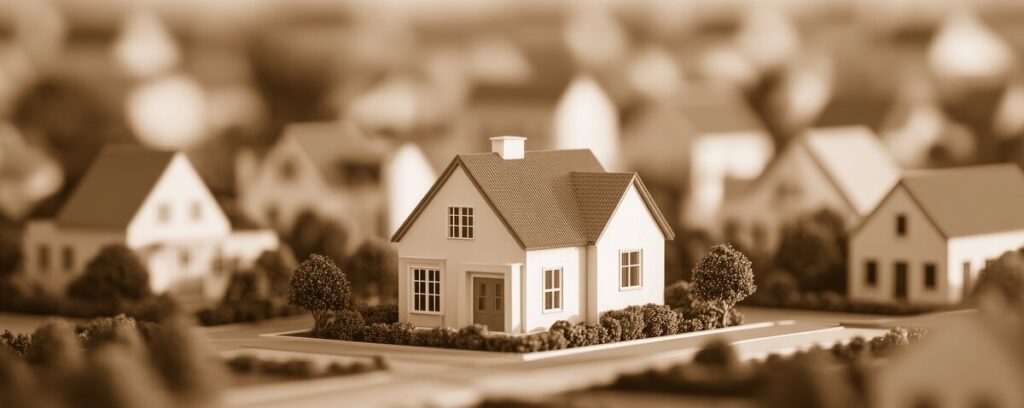
A Neighborhood with Two Names
For longtime residents of the Sound Shore, “Larchmont Hills” has a familiar, almost informal ring to it. The name evokes the rolling streets and wooded residential sections around Larchmont, just east of New Rochelle. It is worth noting, however, that Larchmont Hills is not always treated as a separate municipal neighborhood on official New Rochelle maps. In everyday conversation, the name is often used broadly for the hillier residential areas near the Larchmont border, including sections associated with Larchmont Woods and nearby developments.
That slight uncertainty is part of the neighborhood’s character. Larchmont Hills is less a sharply defined district than a landscape shaped by old roads, property lines, village boundaries, and generations of residents who gave the area its identity.
Before the Houses: Farms, Woods, and Native Paths
Long before paved streets and commuter trains, the land around Larchmont and northern New Rochelle was part of the homeland of the Siwanoy people. The region’s wooded ridges, streams, wetlands, and shoreline formed a connected landscape rather than a collection of neighborhoods.
European settlement began in the seventeenth century. In 1661, English merchant John Richbell acquired land in the Mamaroneck area through a transaction with the Siwanoy. Over time, farms and country estates spread across the Sound Shore. Roads followed older paths and the contours of the land, which helps explain why today’s residential streets often curve, rise, and fall rather than forming a strict grid.
The name Larchmont is generally associated with the area’s later estate history. In the nineteenth century, the region became known for large country properties and summer retreats, including the holdings connected with Peter Jay Munro. Munro, a lawyer associated with Aaron Burr, built a country residence known as Munro Manor. The name Larchmont eventually became attached to the broader community and was later reinforced by the development of Larchmont Manor and other residential areas. ([en.wikipedia.org](https://en.wikipedia.org/wiki/Larchmont%2C_New_York?utm_source=openai))
How “Larchmont Hills” Took Shape
The “hills” in Larchmont Hills are not dramatic mountains, but they are unmistakable when walking or driving through the neighborhood. The land rises gently away from Long Island Sound, creating elevated homesites, wooded slopes, and views that once stretched across open fields toward the water.
Much of the area developed during the late nineteenth and early twentieth centuries, when improved transportation made the Sound Shore increasingly attractive to New York City commuters. The New York, New Haven and Hartford Railroad helped transform nearby communities from seasonal retreats into year-round suburbs. Larchmont’s station and New Rochelle’s transportation connections made it possible for families to live in leafy surroundings while maintaining business ties to Manhattan.
Developers divided former estates and farms into residential parcels, laying out streets that respected the terrain. In the Larchmont area, historic survey records describe subdivisions with roads such as Larchmont Avenue, Beach Avenue, Echo Drive, and Harrison Drive. Some streets changed names or alignments over time, but the pattern remains visible: homes are set among mature trees, with winding approaches and generous setbacks rather than uniform urban blocks. ([larchmontny.gov](https://www.larchmontny.gov/Community/Historic%20Preservation/Larchmont%20Historic%20Resource%20Survey.pdf?utm_source=openai))
The Commuter Era and Residential Growth
By the early 1900s, Larchmont and neighboring New Rochelle were firmly established as commuter communities. Advertisements promoted the Sound Shore as a convenient escape from city congestion, emphasizing fresh air, attractive homes, and fast train service. New Rochelle’s own growth accelerated after the city’s incorporation in 1899, and residential parks appeared across the city as developers marketed planned neighborhoods to middle- and upper-middle-class families. ([columbia.edu](https://columbia.edu/itc/architecture/bass/newrochelle/history/nr_history.html?utm_source=openai))
Larchmont Hills benefited from the same forces. Houses built during this period often reflected the architectural tastes of the day:
- Colonial Revival homes with symmetrical façades and formal entrances
- Tudor Revival houses with steep roofs, masonry details, and half-timbering
- Shingle-style and Arts and Crafts residences designed to blend with wooded lots
- Modest postwar houses added as older estates were divided
The result is an architectural mix that feels cohesive without being repetitive. A walk along the neighborhood’s quieter streets may reveal an early twentieth-century porch, a stone retaining wall, a mature beech tree, and a later addition all sharing the same property.
Streets, Parks, and Nearby Landmarks
Larchmont Hills is defined as much by its surroundings as by its houses. Larchmont Avenue remains one of the area’s principal north-south corridors, connecting residential streets with the village center and the railroad station. The Boston Post Road, one of the region’s oldest transportation routes, forms another important link between Larchmont, New Rochelle, and communities farther east.
The neighborhood is also close to the parks and waterfront spaces that give the Sound Shore its special appeal. Residents have long enjoyed access to parks in both Larchmont and New Rochelle, including the shoreline landscapes associated with Larchmont Manor Park, Pine Brook, and nearby waterfront preserves. In New Rochelle, Glen Island and Beechmont Lake reflect the city’s long tradition of public recreation and planned residential development. Glen Island became a major amusement destination in the late nineteenth century, while Beechmont Lake became the centerpiece of a residential area developed in the early twentieth century. ([columbia.edu](https://columbia.edu/itc/architecture/bass/newrochelle/history/nr_history.html?utm_source=openai))
Nearby institutions have also helped anchor community life. Larchmont’s village center, local schools, houses of worship, libraries, civic organizations, and commuter station provide the everyday framework that turns a collection of streets into a neighborhood. Across the border, New Rochelle’s historic resources—including the Thomas Paine Cottage, Rochelle Park, and the Rochelle Heights Historic District—connect the area to the larger story of Westchester settlement and suburban development. ([ecode360.com](https://ecode360.com/44785796?utm_source=openai))
Decades of Change
Like most established Westchester neighborhoods, Larchmont Hills changed gradually rather than all at once. The first major transition came when summer estates and working farms gave way to permanent residences. After World War II, families adapted older houses to modern life, adding bedrooms, family rooms, garages, and updated kitchens.
The late twentieth century brought another shift. As property values rose and household needs changed, some large homes were renovated, divided, or replaced. Mature landscapes became increasingly prized, and residents began paying closer attention to historic character, tree cover, drainage, and the preservation of older streetscapes.
Today, the neighborhood continues to evolve. Young families, longtime homeowners, commuters, downsizers, and newcomers share streets first laid out more than a century ago. Modern renovations sit beside original clapboard houses. New landscaping replaces old, while stone walls, winding roads, and towering trees preserve the feeling of an earlier era.
What Makes Larchmont Hills Special
The appeal of Larchmont Hills is not based on one famous monument. It lies in the accumulation of small, enduring details: the rise of a street toward a wooded crest, the sound of trains in the distance, an old foundation wall partly hidden by ivy, or a neighbor who remembers when a particular house was built.
The neighborhood’s heritage is also a story of connection. Its history reaches back to the Siwanoy landscape, through colonial farms and nineteenth-century estates, into the commuter boom that shaped modern Larchmont and New Rochelle. The name may be used differently from one map or conversation to the next, but the identity is clear. Larchmont Hills is a place where topography, architecture, transportation, and community have grown together—and where the past remains visible in the ordinary beauty of the streets.